

Best Blood Sugar Supplements in 2026? What the Research Actually Shows
If you typed “best blood sugar supplements 2026” into Google, you’ve probably already scrolled past a dozen listicles that read like they were written by the same copy-paste template — five bullet points, a “buy now” button, and zero actual data. This isn’t that article.
Below is a research-grounded breakdown of what blood sugar supplements can realistically do, what the clinical evidence says about the ingredients that show up in almost every formula on the market, and how to separate a well-designed product from a bottle of powdered marketing. I’ve pulled numbers directly from the CDC, the National Institutes of Health, and peer-reviewed research rather than repeating brand claims.
Medical disclaimer: This article is for educational purposes only and does not substitute for professional medical advice, diagnosis, or treatment. Blood sugar management — especially for anyone with diabetes, prediabetes, or on prescription medication — should always involve a physician or endocrinologist. Never start, stop, or adjust a supplement or medication based on this article alone.
Why This Topic Actually Matters Right Now
This isn’t a niche concern. According to the CDC’s National Diabetes Statistics Report (published January 2026), <cite index=”12-1″>more than 40 million people in the United States have diabetes</cite>, and roughly a quarter of them don’t know it yet. The prediabetes numbers are even more striking: <cite index=”15-1″>115.2 million American adults — more than 2 in 5 — have prediabetes, and 8 in 10 of them are unaware of it</cite>.
Age changes the picture significantly. Among people 65 and older, <cite index=”12-1″>an estimated 31.3 million — 52.1% — have prediabetes</cite>, and diabetes prevalence in this group sits at <cite index=”10-1″>28.8%</cite>. That’s the demographic reality driving most of the search interest behind “blood sugar supplement” queries — people in their 40s, 50s, and 60s who got an A1C number back from a routine physical that made them uneasy, but who aren’t (yet) candidates for medication.
That’s the honest context for this whole category: supplements sit in the gap between “your labs are creeping up” and “your doctor wants to start metformin.” They are not a replacement for either end of that spectrum.
Blood Sugar Reference Ranges Worth Knowing
Before evaluating any supplement, it helps to know what the numbers on your lab report actually mean. These are the standard American Diabetes Association diagnostic thresholds, corroborated by CDC data:
| Test | Normal | Prediabetes | Diabetes |
|---|---|---|---|
| Fasting plasma glucose | Under 100 mg/dL | <cite index=”16-1″>100–125 mg/dL</cite> | 126 mg/dL or higher |
| Hemoglobin A1C | Under 5.7% | <cite index=”16-1″>5.7%–6.4%</cite> | 6.5% or higher |
| 2-hour oral glucose tolerance test | Under 140 mg/dL | 140–199 mg/dL | 200 mg/dL or higher |
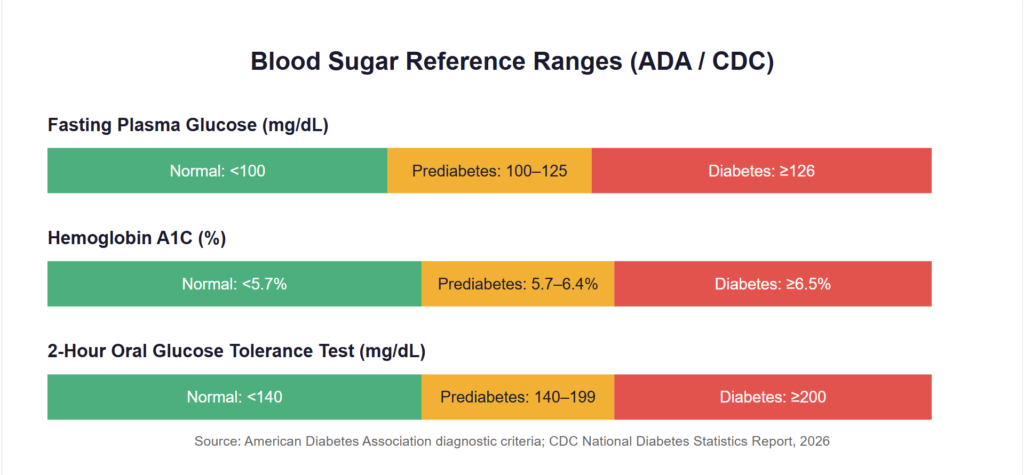
If your fasting glucose or A1C lands in the prediabetes column, that’s precisely the range where lifestyle changes — and, with realistic expectations, some supplements — tend to be discussed most often in clinical literature. It’s also the range where the CDC’s National Diabetes Prevention Program (a structured, evidence-based lifestyle intervention) has the strongest track record, and it’s worth asking your doctor whether you qualify.
What “Blood Sugar Supplements” Actually Are, Legally Speaking
Here’s something most articles in this space skip entirely: in the U.S., blood sugar supplements are regulated as dietary supplements, not drugs. Under the Dietary Supplement Health and Education Act (DSHEA), a manufacturer can make a “structure/function” claim — something like “supports healthy glucose metabolism” — without pre-approval from the FDA, as long as the label carries a specific disclosure. Per the FDA’s own guidance, that disclaimer must state that the claim <cite index=”22-1″>has not been evaluated by FDA and that the product is not intended to diagnose, treat, cure, or prevent any disease, because only a drug can legally make such a claim</cite>.
That single sentence explains almost every phrase you’ll read on a supplement label — “supports,” “promotes,” “helps maintain” — instead of “lowers” or “treats.” It’s not necessarily a red flag; it’s the law. But it does mean the burden of due diligence sits with you, the consumer, more than it would with a prescription drug that went through FDA clinical trials.
The Ingredients That Actually Show Up in Research
Rather than reviewing brands first, it’s more useful to understand the raw ingredients — because nearly every product on the market in 2026 is built from the same short list.
Berberine
Berberine is the ingredient with the most robust research behind it in this category, which is why it’s earned the nickname “nature’s metformin” in wellness circles (a comparison researchers themselves are careful to qualify). According to the NIH’s National Center for Complementary and Integrative Health (NCCIH), <cite index=”4-1″>some studies suggest that chromium, cinnamon, or berberine might help with blood sugar control</cite>, though <cite index=”4-1″>most of these studies have limitations in size and differ from each other in participant characteristics, formulations, dosing, length, and results, leading to no clear conclusions</cite>.
On dosing specifically, NCCIH notes <cite index=”4-1″>berberine is considered safe at doses used in clinical situations — 200 to 1,000 mg, two to three times daily</cite>, though <cite index=”4-1″>common side effects include mild-to-moderate nausea, diarrhea, bloating, and constipation, and berberine may interact with certain medications</cite>. A commonly cited meta-analysis on berberine’s metabolic effects was limited largely to Chinese patient populations, which is an important caveat when applying the results to a broader population.
Interestingly, a 2024 randomized, triple-blind, placebo-controlled trial (NCT06700915, registered on ClinicalTrials.gov) is currently evaluating <cite index=”5-1″>a berberine-based nutraceutical over 24 weeks in 80 participants</cite> — a sign that formal clinical scrutiny of these formulas is still actively catching up to their popularity, not that it’s already settled science.
Chromium
Chromium picolinate is the second-most common active ingredient. A 2022 systematic review NCCIH cites, covering <cite index=”4-1″>16 studies and 868 participants</cite>, found that chromium supplementation <cite index=”4-1″>may help improve HbA1c, fasting blood glucose, and insulin resistance in people with type 2 diabetes</cite>. That’s a meaningfully positive signal — but it comes with a caveat NCCIH also flags: <cite index=”4-1″>chromium supplements may cause stomach pain and bloating, and there have been a few reports of kidney damage, liver damage, muscular problems, and skin reactions at large doses</cite>.
Worth knowing: chromium’s benefit appears concentrated in people who are actually deficient. If your baseline levels are adequate, the research doesn’t suggest extra chromium moves the needle much further.
Cinnamon, Alpha-Lipoic Acid, Gymnema, Bitter Melon
This is where the evidence gets thinner and more inconsistent — and where marketing tends to outpace the science the most. Independent reviews of the research landscape describe cinnamon extract results as genuinely mixed, with some meta-analyses finding modest glucose benefits and others finding none over placebo. Alpha-lipoic acid has a more established research base for diabetic neuropathy pain than for glucose control itself, and gymnema, bitter melon, and banaba leaf extract all have small, preliminary human studies rather than large controlled trials.
None of that means these ingredients are useless — it means the honest answer, ingredient by ingredient, is “some signal, not a slam dunk,” which is a less exciting sentence than what most sales pages will tell you.
A Practical Framework for Evaluating Any Product
Having read through dozens of label panels and clinical trial registrations in this category, a few patterns separate more credible formulas from weaker ones:
- Milligram-level transparency. If a label lists a “proprietary blend” with a total weight but no per-ingredient dose, you can’t compare it to the research doses above — which means you have no way to judge whether it’s likely to do anything.
- Dose-to-research alignment. Compare the actual number on the label to the ranges cited above (e.g., berberine’s studied range of 200–1,000 mg per dose). A formula built around sub-clinical doses of eight “trendy” ingredients is often less effective than one or two ingredients dosed properly.
- Third-party testing. Look for NSF, USP, or Informed Choice certification. The supplement industry has no FDA pre-market approval, so independent purity/potency testing is your best substitute.
- Realistic label language. Claims like “reverses diabetes” or “eliminates the need for medication” are a legal and scientific red flag — no supplement is permitted, or supported by evidence, to make that claim.
- Interaction awareness. Berberine, chromium, and several herbal ingredients can interact with metformin, sulfonylureas, and other glucose-lowering medications, sometimes compounding their effect to the point of hypoglycemia. This is precisely why a conversation with your prescribing physician matters before adding anything.
If you want a deeper, side-by-side breakdown of two of the most-searched formulas in this space, we’ve done detailed independent comparisons here:
- Gluco6 vs Sugar Defender: Which One Actually Works?
- Gluco6 Review 2026: Does This Blood Sugar Supplement Actually Work?
- Gluco6 Ingredients: A Deep Dive Into What Makes This Formula Different
What Supplements Cannot Replace
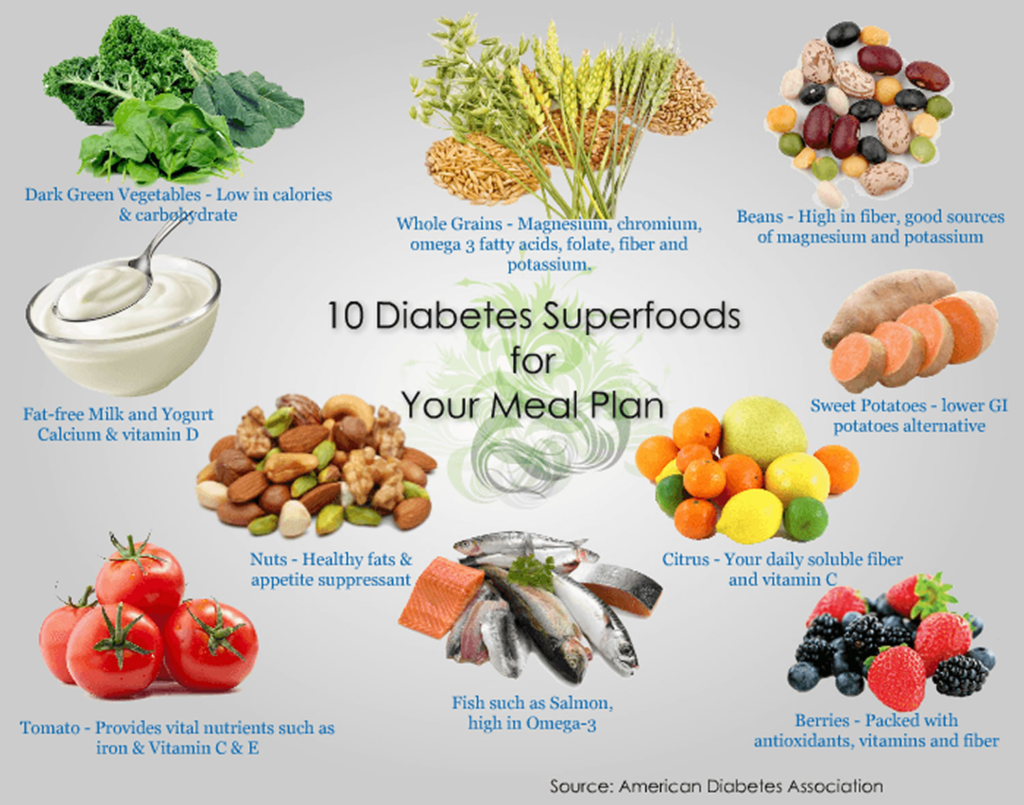
It bears repeating because it gets buried in most articles: the single most evidence-backed intervention for blood sugar isn’t a capsule. The CDC’s own clinical guidance is that <cite index=”9-1″>people can prevent or prolong the onset of prediabetes or type 2 diabetes by maintaining a healthy weight, eating a healthy diet, and implementing 150 to 300 minutes per week of moderate physical activity</cite>. That combination — sustained over months, not days — outperforms any supplement in the controlled studies we have.
If you’re over 40 and want the lifestyle side of this covered in more depth — meal timing, strength training’s specific effect on insulin sensitivity, sleep’s underrated role in fasting glucose — we’ve written a full, practical guide here: How to Manage Blood Sugar Naturally After 40.
Who Should Be Especially Cautious
- Anyone on insulin, metformin, sulfonylureas, or GLP-1 medications — stacking a glucose-lowering supplement on top of these can push blood sugar too low.
- Anyone with kidney or liver conditions, given chromium’s documented (if rare) organ-related side effects at high doses.
- Pregnant or breastfeeding individuals — most of these ingredients haven’t been studied in this population.
- Anyone scheduled for surgery — berberine and similar compounds can affect bleeding and blood sugar control perioperatively.
Frequently Asked Questions
Can a supplement lower my A1C on its own? Some ingredients — berberine and chromium in particular — have data suggesting modest improvements in glucose markers in certain populations. But per NCCIH, the overall evidence base still has enough inconsistency across studies that no supplement should be treated as a substitute for prescribed treatment or medical monitoring.
How long before I’d notice anything? Clinical trials on berberine and chromium typically run 8–24 weeks before measuring changes in fasting glucose or A1C, since A1C reflects roughly a 3-month average. Anything promising results within days should be treated skeptically.
Are “natural” and “safe” the same thing? No. Chromium and berberine both carry documented side effects and drug interaction risks. “Natural” describes origin, not safety profile.
What’s the difference between the top blood sugar supplement brands? Mostly dosing transparency, ingredient sourcing, and third-party testing — not the underlying ingredient list, which tends to overlap heavily across brands. Our Gluco6 ingredient breakdown walks through exactly how one popular formula stacks up against the research doses cited above.
The Bottom Line
The “best” blood sugar supplement in 2026 is the one built around ingredients with real dosing transparency, aligned with the ranges actually used in clinical research, taken alongside — never instead of — the lifestyle fundamentals and medical care that move these numbers the most. Berberine and chromium have the most supportive (if still imperfect) evidence; cinnamon, gymnema, and bitter melon have promising but thinner data.
For a deeper comparison of specific products built on these ingredients, see our related reviews above, and for the daily habits that back up whatever you choose to take, start with our natural blood sugar guide for adults over 40.
Sources cited: CDC National Diabetes Statistics Report (2026); CDC “A U.S. Report Card” (2026); CDC Prediabetes data; NIH National Center for Complementary and Integrative Health, “Diabetes and Dietary Supplements: What You Need To Know”; U.S. FDA, “Structure/Function Claims” and DSHEA guidance; ClinicalTrials.gov (NCT06700915).
This article does not constitute medical advice. Always consult a licensed healthcare provider before starting, stopping, or combining any supplement with existing medications or health conditions.