

Bone Health After Menopause: How to Prevent Osteoporosis Naturally
Osteoporosis is often called a “silent disease” — and the silence is the point. Bone loss happens without pain, without symptoms, and without warning until a fracture occurs. For women after menopause, the bone loss accelerates dramatically, and the window to influence the trajectory is earlier than most people realize.
This guide covers what bone health after menopause actually requires — not generic calcium advice, but the full picture of what the science supports.
Why Menopause Accelerates Bone Loss
Estrogen directly regulates bone remodeling. It inhibits osteoclasts (cells that break down bone) and supports the activity of osteoblasts (cells that build bone). When estrogen drops after menopause, this balance shifts dramatically toward bone breakdown.
In the first 5–10 years after menopause, women can lose 2–3% of bone density per year — compared to roughly 0.5–1% annually before menopause. Over a decade, this accumulates to a 20–30% reduction in bone mineral density, which crosses the clinical thresholds for osteopenia (early bone loss) and osteoporosis (severe bone loss).
The hip, spine, and wrist are the most vulnerable sites. Hip fractures are particularly serious — they’re associated with significant loss of independence and increased mortality risk in older women.
The Nutrients That Matter (and How Much You Actually Need)
Calcium
Calcium is the primary mineral in bone. Post-menopausal women need 1,200mg daily — higher than the 1,000mg recommended for younger adults. Food sources are preferable to supplements for absorption and safety: dairy products (milk, yogurt, cheese), fortified plant milks, canned salmon and sardines with bones, edamame, and leafy greens (kale, bok choy, broccoli).
Calcium supplements at high doses (above 500mg at once) are not absorbed as efficiently and have been associated in some studies with cardiovascular concerns — though this remains debated. If you supplement, split doses and take with food.
Vitamin D
Vitamin D is essential for calcium absorption in the gut. Without adequate vitamin D, even high calcium intake doesn’t translate to bone. Post-menopausal women are frequently deficient, particularly those in northern latitudes, those with darker skin, or those who avoid sun exposure.
The recommended intake is 600–800 IU daily, though many bone health specialists recommend 1,500–2,000 IU for deficient individuals. Testing your 25-OH vitamin D level is the only way to know your actual status — target 40–60 ng/mL for optimal bone outcomes. Our article on vitamin D deficiency signs covers this in detail.
Magnesium
Approximately 60% of body magnesium is stored in bone. Magnesium influences bone mineral density directly and also regulates vitamin D metabolism. Deficiency is common and often undiagnosed. Post-menopausal women should aim for 320mg daily from food (nuts, seeds, legumes, leafy greens) and supplements if dietary intake is insufficient.
Vitamin K2
Vitamin K2 (specifically MK-7 form) activates osteocalcin, a protein that incorporates calcium into bone matrix. Without adequate K2, calcium circulates but doesn’t deposit efficiently into bone — and may deposit in arteries instead. Japanese studies on natto (fermented soybean, a rich K2 source) show significantly lower hip fracture rates. Supplemental MK-7 at 90–180mcg daily is well-supported by the evidence.
Protein
Bone is approximately 30% protein (mainly collagen). Adequate protein supports the organic matrix into which minerals incorporate. Post-menopausal women who consume more protein have higher bone density and lower fracture risk. Aim for 1.2–1.5g per kg body weight — the same high-protein recommendations that support muscle also support bone.
Exercise for Bone Health
Weight-Bearing Exercise
Mechanical stress is the primary driver of bone maintenance and formation. Weight-bearing activities — walking, hiking, jogging, dancing, and anything done on your feet against gravity — signal bones to maintain and increase density. Swimming and cycling, while excellent for cardiovascular health, don’t stimulate bone adequately because they’re non-weight-bearing.
Resistance Training
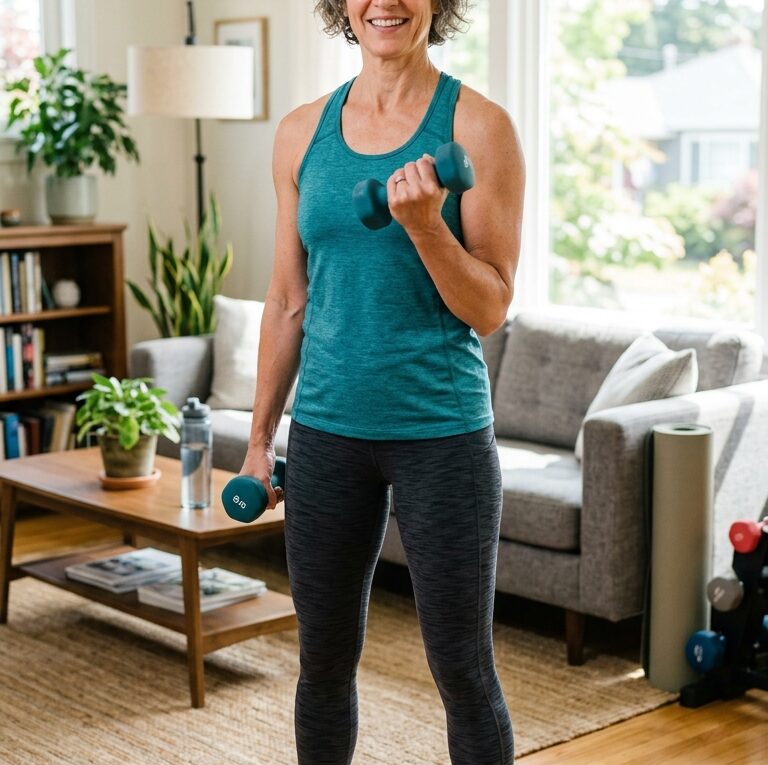
Muscle contractions pull on bone attachments, creating the mechanical stress that stimulates bone remodeling. Resistance training (weights, resistance bands) produces greater bone density gains than aerobic exercise alone. Two to three sessions weekly, with progressive load increases, is the evidence-based recommendation for bone health.
Balance and Fall Prevention
Bone density matters less if you never fall. Falls are the proximate cause of most osteoporotic fractures. Balance training — yoga, tai chi, single-leg exercises, balance boards — reduces fall risk significantly in older adults. This is an underemphasized component of fracture prevention.
DEXA Scans: When to Get Tested
A DEXA scan measures bone mineral density and is the gold standard for osteoporosis diagnosis. All women should have a baseline DEXA at age 65; earlier (around menopause onset) for women with risk factors including early menopause, family history of osteoporosis, history of eating disorders, long-term corticosteroid use, or low body weight.
Results are given as a T-score. T-score of -1.0 or above is normal; between -1.0 and -2.5 is osteopenia; -2.5 or below is osteoporosis. Knowing your baseline at menopause allows tracking of progression or improvement over time.
Hormone Therapy and Bone
Hormone replacement therapy (HRT) is highly effective at preventing bone loss — estrogen directly inhibits osteoclast activity. Women on HRT consistently show significantly higher bone density and lower fracture rates than untreated women. This bone-protective effect is one factor in the risk-benefit calculation around HRT at menopause. This decision involves individual considerations beyond bone health and should be made with your doctor.
Frequently Asked Questions
Can you rebuild bone density after menopause?
Yes, though the degree depends on starting density and intervention intensity. Resistance training, high protein, and adequate calcium/vitamin D/K2 can meaningfully increase bone density. Pharmaceutical agents (bisphosphonates, denosumab, romosozumab) can produce larger increases when indicated. Prevention and early intervention are far more effective than trying to rebuild from osteoporosis.
Does dairy intake really protect bones?
The evidence is more complex than “drink milk for strong bones.” Dairy is a good calcium and protein source and is associated with lower fracture risk in most studies. However, non-dairy calcium sources are equally effective when intake is adequate. The key variable is total calcium and protein, not dairy specifically.
Are calcium supplements safe?
At moderate doses (500mg or less at a time, totaling no more than 1,000mg supplemental daily), calcium supplements appear safe. Some studies suggest cardiovascular concerns at higher supplemental doses, though the evidence is mixed. Food-first approaches are preferred for safety, with supplements bridging any gap.
How does weight affect bone density?
Both very low body weight and obesity affect bone adversely, though through different mechanisms. Normal to slightly above-normal weight is associated with the best bone outcomes. Very thin women (BMI under 18.5) are at particularly high osteoporosis risk. Intentional weight loss in post-menopausal women requires attention to protein and resistance training to avoid disproportionate bone and muscle loss.
Start Now, Not Later
The most impactful window for protecting bone through natural means is the first decade after menopause, when bone loss rate is highest. The interventions — protein-forward diet, adequate vitamin D and K2, resistance training, balance work — overlap almost entirely with general healthy aging strategies. Begin now; the investment compounds over years into significantly better bone density, fewer fractures, and better quality of life.
2 thoughts on “Bone Health After Menopause: How to Prevent Osteoporosis Naturally”