

Best Blood Sugar Supplements in 2026: What Actually Works (and What’s Just Hype)
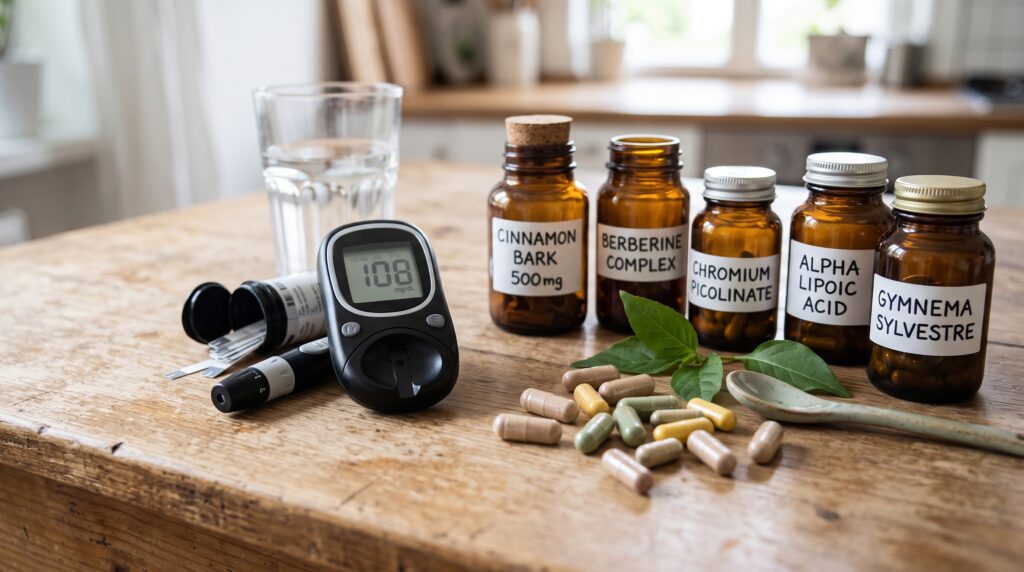
Medical Disclaimer: This article is for educational purposes only and does not constitute medical advice. It is not a substitute for professional diagnosis or treatment. Always talk to your doctor, endocrinologist, or a registered dietitian before starting any supplement — especially if you take insulin, sulfonylureas, or other glucose-lowering medication. Stopping or replacing a prescribed treatment with a supplement can be dangerous.
Last updated: July 2026
If you’ve typed “best blood sugar supplements 2026” into Google, you’ve probably already scrolled past a dozen listicles that read like they were written by the same bot, recycling the same five ingredients with no numbers, no sources, and no honesty about what the research actually shows.
This article is different. It’s built around the actual clinical trial data — fasting glucose changes in mmol/L, HbA1c shifts in percentage points, confidence intervals, and what regulatory bodies like the American Diabetes Association (ADA) currently say about supplement use. It also tells you where the evidence is thin, because that matters just as much as where it’s strong.
Table of Contents
- Why This Topic Matters More in 2026
- Understanding Your Numbers: Blood Sugar Reference Ranges
- Can Supplements Really Lower Blood Sugar?
- The Ingredients With the Strongest Evidence
- A Realistic Scenario: What Changing an Approach Looks Like
- How to Actually Choose a Product in 2026
- Who Should Be Cautious or Avoid Supplements
- Frequently Asked Questions
- Related Reading
1. Why This Topic Matters More in 2026
The numbers behind the search interest are not marketing spin — they’re public health data. According to the CDC’s National Diabetes Statistics Report (updated January 2026), roughly 40.1 million Americans are currently living with diabetes, and 115.2 million adults — more than 2 in 5 — have prediabetes. Perhaps the most striking figure: 8 in 10 adults with prediabetes don’t know they have it.
That last statistic is the real reason “blood sugar supplements” is such a heavily searched phrase in 2026. Millions of people are getting a fasting glucose or HbA1c number back from a routine blood panel that’s borderline — not diabetic, but no longer squarely “normal” — and they’re looking for something they can do today, before it becomes a prescription conversation.
That instinct is reasonable. The mistake is assuming a supplement bottle can substitute for the two interventions with the strongest evidence of all: nutrition and movement. Supplements, at best, are a supporting layer — hence the name.
2. Understanding Your Numbers: Blood Sugar Reference Ranges
Before evaluating any supplement, it helps to know what you’re actually trying to move. These are the standard adult reference ranges used by the ADA and NIDDK:
| Test | Normal | Prediabetes | Diabetes |
|---|---|---|---|
| Fasting plasma glucose | 70–99 mg/dL (3.9–5.5 mmol/L) | 100–125 mg/dL (5.6–6.9 mmol/L) | ≥126 mg/dL (≥7.0 mmol/L) |
| HbA1c (3-month average) | Below 5.7% | 5.7%–6.4% | 6.5% or higher |
| 2-hour oral glucose tolerance test | Below 140 mg/dL | 140–199 mg/dL | 200 mg/dL or higher |
A one-point HbA1c improvement sounds small on paper, but clinically it’s significant: a 1.0% HbA1c reduction is associated with roughly a 21% drop in diabetes-related deaths and a 14% drop in heart attack risk, according to the landmark UKPDS cohort data that still underpins most diabetes guidelines today. Keep those percentages in mind — they’re the scale researchers use when they say a supplement “works.”
3. Can Supplements Really Lower Blood Sugar?
Here’s the part most affiliate blogs skip: the American Diabetes Association’s own 2024 Standards of Care state plainly that <cite index=”16-1″>there is insufficient evidence to support the routine use of herbal supplements and micronutrients, such as chromium, to improve glycemia in people with diabetes</cite>.
That’s not the same as saying supplements do nothing. It means the effect sizes seen in trials are often real but modest, study quality varies a lot, and no supplement is positioned — by the researchers themselves — as a replacement for metformin, insulin, or lifestyle change. A few ingredients, however, have accumulated enough randomized, placebo-controlled data that they’re worth understanding in detail. That’s what the next section covers.
4. The Ingredients With the Strongest Evidence
Berberine
Berberine is a plant alkaloid extracted from Coptis chinensis (goldenseal’s relative) and other barberry-family plants, used for centuries in traditional Chinese medicine before Western researchers began running controlled trials on it in the 2000s.
- A 2025 review in Frontiers in Pharmacology reported that <cite index=”1-1″>berberine monotherapy reduces HbA1c by about 1.5 percentage points in people with type 2 diabetes, an effect comparable to metformin</cite>.
- A broader umbrella meta-analysis found berberine supplementation produced statistically significant reductions in <cite index=”5-1″>fasting blood glucose and HbA1c across pooled randomized controlled trials</cite>.
- In people with prediabetes specifically, a 12-week randomized, double-blind, placebo-controlled pilot trial used ADA diagnostic cutoffs — <cite index=”4-1″>fasting glucose of 5.6–6.9 mmol/L or HbA1c of 5.7%–6.4%</cite> — to enroll participants and test berberine’s effect on glycemic markers.
- The catch: <cite index=”4-1″>berberine has been associated with gastrointestinal side effects including nausea, vomiting, diarrhea, constipation, and abdominal discomfort</cite> in a meaningful minority of users, and it can interact with several prescription drugs metabolized through the CYP3A4 liver pathway (including some statins).
Typical studied dose: 300–500 mg, two to three times daily with meals. It should never be combined with diabetes medication without medical supervision, since the additive glucose-lowering effect can push blood sugar too low.
Chromium Picolinate
Chromium is a trace mineral involved in insulin signaling, and it’s one of the most heavily studied glucose-related supplements — with genuinely mixed results depending on baseline glycemic status.
- A 2014 systematic review in the Journal of Clinical Pharmacy and Therapeutics found chromium monosupplementation improved HbA1c by a mean difference of <cite index=”12-1″>−0.55% and fasting plasma glucose by −1.15 mmol/L</cite> compared with placebo, with benefit concentrated at doses above 200 mcg daily.
- A larger pooled analysis of 41 studies found chromium supplementation <cite index=”11-1″>improved HbA1c by −0.6% and fasting glucose by −1.0 mmol/L in people with type 2 diabetes, with no measurable effect in people without diabetes</cite> — an important nuance, since it suggests chromium isn’t a universal fix.
- The Linus Pauling Institute at Oregon State University notes that in people already at healthy baseline glucose, six months of high-dose chromium picolinate showed <cite index=”14-1″>no measurable effect on glucose, insulin, or lipid levels</cite> — reinforcing that this mineral appears to help mainly when glucose regulation is already impaired.
Typical studied dose: 200–1,000 mcg/day, though most clinical benefit has been observed around 200–600 mcg. Doses above 1,000 mcg/day have no added benefit and carry a theoretical, still-debated risk of kidney effects with long-term high-dose use.
Cinnamon Extract (Cinnamomum cassia)
Cinnamon’s active compounds — including cinnamaldehyde and methylhydroxychalcone polymers — appear to slow carbohydrate breakdown in the gut and improve insulin sensitivity. Trial results are more inconsistent than berberine’s, largely because cassia cinnamon dosing and extraction methods vary wildly between studies, but multiple meta-analyses report modest fasting glucose reductions in the range of 10–24 mg/dL versus placebo in people with type 2 diabetes.
A practical caution: cassia cinnamon (the common grocery-store type) contains coumarin, which can stress the liver at high, sustained doses. Standardized water-extract supplements (often labeled with reduced coumarin content) are the safer choice for daily use over Ceylon or bulk cassia powder.
Alpha-Lipoic Acid (ALA)
ALA is an antioxidant produced naturally in the body that’s been studied mainly for diabetic neuropathy (nerve pain), where 600 mg/day IV or oral dosing has decent trial support for symptom relief. Its direct effect on fasting glucose is smaller and less consistent than berberine’s or chromium’s, but it’s frequently included in blood sugar formulas because of this secondary nerve-protective benefit — relevant for anyone with long-standing elevated glucose.
Fenugreek and Gymnema Sylvestre
Fenugreek seed fiber slows gastric emptying and carbohydrate absorption; small trials show fasting glucose improvements when 5–15 g of fenugreek seed is taken with meals. One 12-week randomized trial combining <cite index=”6-1″>berberine and fenugreek co-supplementation found significant decreases in fasting insulin, HbA1c, and inflammatory markers (hs-CRP) compared to baseline</cite>, hinting that combination formulas may outperform single-ingredient ones — though more head-to-head trials are needed.
Gymnema sylvestre, sometimes called “the sugar destroyer” in Ayurvedic medicine, is thought to blunt sweet-taste receptors and reduce sugar absorption in the intestine. Evidence is promising but comes from smaller, shorter trials than berberine’s, so treat claims here with more caution.
Magnesium
Magnesium deficiency is common in people with type 2 diabetes and is independently associated with worse insulin resistance. Correcting a genuine deficiency (confirmed via a blood test — serum magnesium below 1.7 mg/dL) has clearer evidence of benefit than taking magnesium as a blanket “blood sugar supplement” when levels are already normal.
5. A Realistic Scenario: What Changing an Approach Looks Like
To illustrate how these pieces typically fit together — this is an illustrative composite based on common patterns described in clinical literature, not a documented case study or individual testimonial:
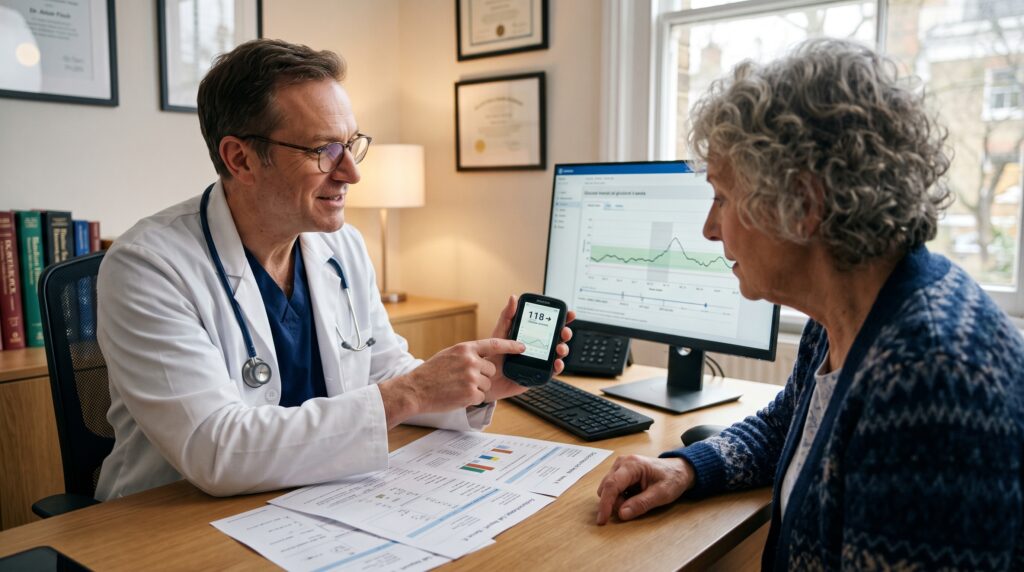
A 52-year-old with a fasting glucose of 108 mg/dL and HbA1c of 5.9% (solidly in the prediabetes range) is told by their doctor to revisit lifestyle first. Over 12 weeks, they add 150 minutes of brisk walking per week, cut refined carbohydrates at dinner, and — with their physician’s sign-off — start a berberine supplement at 500 mg twice daily. A follow-up panel at 12 weeks shows fasting glucose around 96 mg/dL and HbA1c down to 5.6%, back inside the normal range.
Nothing about that trajectory is guaranteed for any individual — genetics, existing insulin resistance, weight, and consistency all affect the outcome. But it reflects the range of change reported in the trials cited above, and it underscores the point worth repeating: the supplement was one input among several, introduced under medical guidance, not the sole intervention.
6. How to Actually Choose a Product in 2026
Not all bottles labeled “blood sugar support” contain clinically studied doses. Use this checklist:
- Check the exact dose against the studied dose. A label listing “berberine blend 200 mg” spread across five ingredients is not the same as 500 mg of standardized berberine HCl.
- Look for third-party testing. Certifications from NSF International or USP indicate the product was independently verified to contain what the label claims.
- Avoid proprietary blends that hide individual amounts. If you can’t see the milligram amount of each active ingredient, you can’t compare it to the research.
- Check for drug interaction warnings, particularly if you take metformin, sulfonylureas, insulin, or statins.
- Be skeptical of “cures diabetes” language. No supplement is FDA-approved to treat, cure, or prevent diabetes — regulated claims like that are a red flag under FDA dietary supplement labeling rules.
7. Who Should Be Cautious or Avoid Supplements
- Anyone on insulin or sulfonylureas — combining these with glucose-lowering supplements raises real hypoglycemia risk.
- Pregnant or breastfeeding individuals — most ingredients above lack safety data in pregnancy.
- People with liver or kidney disease — several ingredients (cinnamon’s coumarin, high-dose chromium) are processed through these organs.
- Anyone scheduled for surgery — berberine and several herbal glucose-lowering agents are generally advised to be stopped 1–2 weeks before a procedure due to bleeding and blood-sugar interaction risks.
If you experience symptoms of low blood sugar — shakiness, sweating, confusion, rapid heartbeat — after starting a new supplement, stop it and contact your healthcare provider.
8. Frequently Asked Questions
Do blood sugar supplements work as well as metformin? No supplement has been shown in large, long-term trials to match metformin’s overall safety and efficacy profile for type 2 diabetes management. Berberine has shown HbA1c reductions in some trials comparable to metformin over shorter study periods, but metformin has decades more long-term outcome data behind it.
How long before I’d notice a difference? Most clinical trials measuring HbA1c changes ran 8–24 weeks, since HbA1c reflects roughly a 3-month average. Fasting glucose can shift sooner, but a single morning reading is noisy — track trends over weeks, not days.
Can I take multiple supplements from this list together? Combining several glucose-lowering ingredients compounds the hypoglycemia risk, especially alongside medication. This is exactly the kind of decision to make with a doctor or pharmacist who can see your full medication list.
Is a “natural” supplement automatically safer than medication? No. Dietary supplements in the U.S. are regulated far less strictly than prescription drugs — the FDA does not verify efficacy or, in most cases, purity before a product reaches shelves. “Natural” describes origin, not safety.
9. Related Reading
Blood sugar regulation is closely tied to other areas of metabolic and hormonal health worth exploring:
- Prostate Health After 50: The Complete Guide
- Prostate Health After 50: The Complete Guide (Part 2)
- Prosta Peak: The Complete Guide to Natural Prostate Support in 2026
- Best Prostate Supplements in 2026: Ingredients That Actually Work
External, Authoritative Sources Cited in This Article
- CDC — National Diabetes Statistics Report (2026)
- American Diabetes Association — Diabetes Statistics
- NIDDK — Diabetes Statistics
- Linus Pauling Institute, Oregon State University — Chromium
- Frontiers in Pharmacology — Berberine in Diabetes Treatment (2025)
Reminder: This article does not substitute for professional medical guidance. Blood sugar management decisions — including any supplement, diet, or medication change — should be made with a licensed healthcare provider who knows your full medical history.