

Best Blood Sugar Supplements in 2026: Science-Backed Ingredients That Actually Work
Introduction: The 2026 Landscape of Blood Sugar Support
If you’ve recently searched for a blood sugar supplement — whether your doctor mentioned your glucose levels, a friend recommended a product, or an ad caught your attention — you’re part of a massive and growing audience. Blood sugar management is one of the most actively researched areas in the dietary supplement industry, with more options available today than at any point in the past decade.
But more options also mean more noise, more marketing, and more confusion.
In 2026, the conversation around blood sugar supplements has evolved significantly. The scientific community has moved beyond generic “blood sugar support” claims toward evidence-based ingredient protocols with measurable outcomes. Meanwhile, regulatory bodies like the FDA and FTC have intensified enforcement actions against companies making illegal claims to treat or cure diabetes.
This guide cuts through the marketing hype. You’ll learn which ingredients have meaningful research behind them, how to read a supplement facts panel critically, what questions to ask before purchasing, and how to recognize red flags in supplement marketing.
⚠️ Medical Disclaimer: This article is for informational and educational purposes only. It does not constitute medical advice, diagnosis, or treatment recommendations. Always consult a qualified healthcare professional before starting any supplement, particularly if you are managing a chronic health condition or taking prescription medications. Dietary supplements are not intended to diagnose, treat, cure, or prevent any disease.
Understanding Your Blood Sugar: The Numbers That Matter
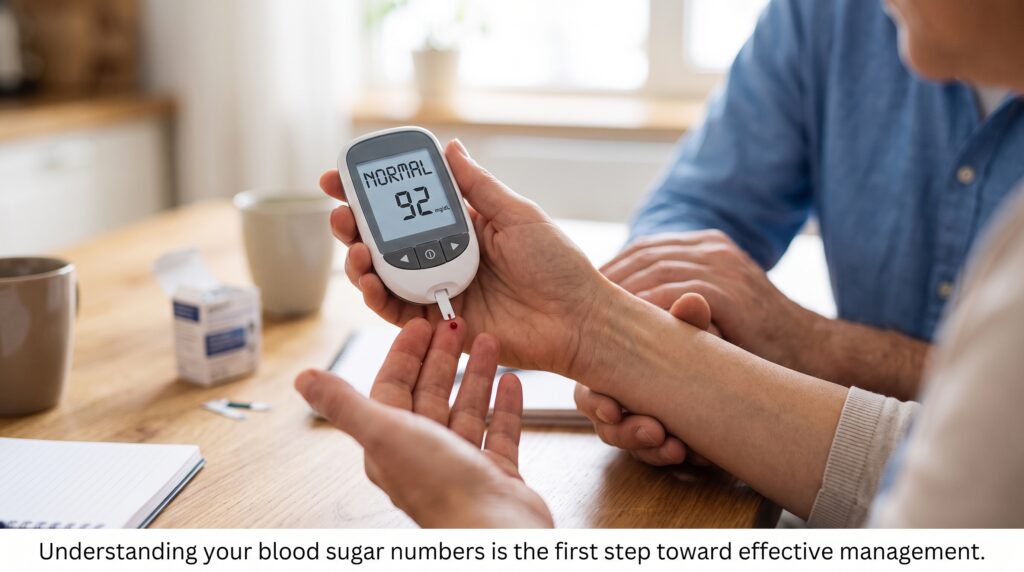
Before evaluating supplements, it’s essential to understand what healthy blood sugar looks like. Here are the standard reference ranges:
| Measurement | Normal Range | Prediabetes | Diabetes |
|---|---|---|---|
| Fasting Blood Glucose | 70–99 mg/dL (3.9–5.5 mmol/L) | 100–125 mg/dL | ≥126 mg/dL |
| 2-Hour Post-Meal | <140 mg/dL (7.8 mmol/L) | 140–199 mg/dL | ≥200 mg/dL |
| HbA1c | <5.7% | 5.7–6.4% | ≥6.5% |
Source: Merck Manual Professional Edition
Your body manages blood sugar through a complex system involving insulin production, insulin sensitivity, glucose absorption from food, and cellular energy metabolism. When any part of this system is under strain — from diet, genetics, aging, activity levels, or other factors — blood sugar levels can fluctuate outside optimal ranges.
Supplements in this category generally aim to support one or more of these mechanisms. The key word is support. Under the Dietary Supplement Health and Education Act (DSHEA), supplements are not medications. They are formulated to provide nutritional support for processes your body already performs.
The Top Blood Sugar Supplements in 2026: Evidence-Based Ingredients
Based on systematic reviews, meta-analyses, and randomized controlled trials published through 2026, here are the ingredients with the most consistent human evidence for blood sugar support.
1. Berberine: The Gold Standard
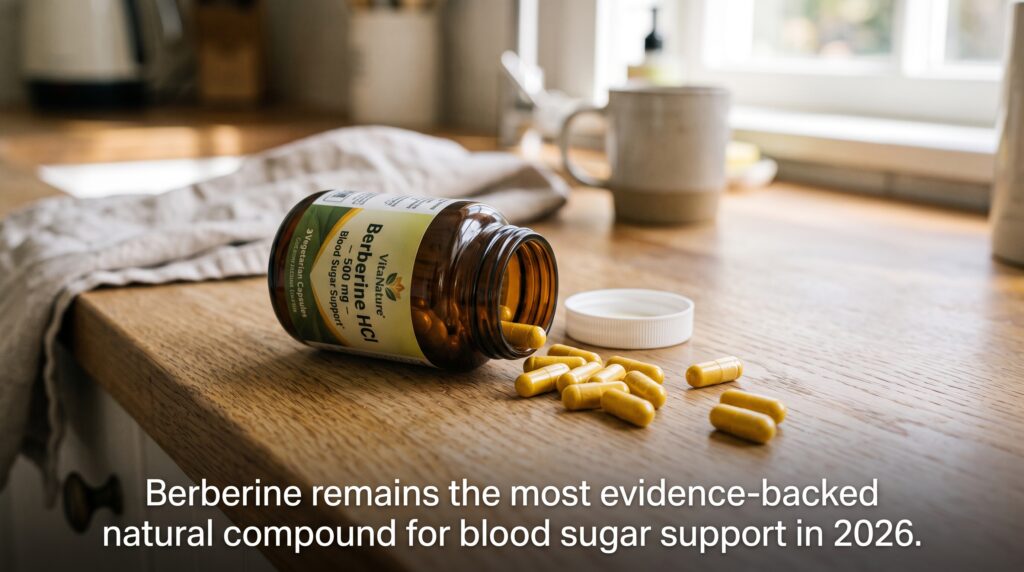
The Evidence: Berberine is one of the most extensively studied natural compounds for glucose metabolism. Across 27 randomized controlled trials covering over 2,500 adults with type 2 diabetes, 500 mg taken three times daily lowered HbA1c by approximately 0.9% over three months.
Multiple meta-analyses, including a systematic review in Frontiers in Pharmacology (PMC9709280), confirm significant reductions in fasting blood glucose and HbA1c in type 2 diabetes populations. Some clinical research shows that berberine taken at 500 mg 2–3 times daily might be as effective as taking metformin at the same dosage.
How It Works: Berberine activates AMPK, a cellular energy sensor that reduces liver glucose production and improves insulin sensitivity.
Standard Dosage: 900–2,000 mg per day, divided into three to four doses, taken with meals.
Important Considerations:
- Berberine is very poorly absorbed in its natural state — only about 5% makes it into circulation. Look for formulations with absorption enhancers like liposomes or phytosomes.
- May interact with medications metabolized by CYP3A4, CYP2D6, and CYP2C9.
- Can cause gastrointestinal side effects in some people.
2. Cinnamon: The Everyday Helper
The Evidence: Pooled data show that 1–6 grams daily of cassia or Ceylon cinnamon lowers fasting glucose by 10–24 mg/dL in people with HbA1c under 8%. A systematic review published in 2026 confirmed that cinnamon, along with curcumin, fenugreek, and ginger, demonstrated more consistent effects on fasting blood glucose and HbA1c.
How It Works: Cinnamon enhances insulin signaling and slows carbohydrate breakdown in the gut.
Best For: People in early stages of blood sugar elevation (prediabetes or mild type 2 diabetes).
Dosage Tip: Ceylon cinnamon contains lower levels of coumarin (a compound that can affect the liver) compared to cassia cinnamon. If taking higher doses long-term, opt for Ceylon.
3. Magnesium: The Unsung Hero
The Evidence: Magnesium plays a critical role in how your body handles both cholesterol and blood sugar. When magnesium levels run low, it becomes harder for your pancreas to release insulin properly, which can lead to insulin resistance.
The Vicious Cycle: Insulin resistance causes your body to lose even more magnesium through urine, creating a cycle that’s hard to break on its own.
Standard Dosage: 200–400 mg daily of magnesium glycinate or citrate (highly absorbable forms).
Who Benefits Most: Individuals with low magnesium levels — which is surprisingly common in Western diets.
4. Alpha-Lipoic Acid (ALA): The Insulin Sensitizer
The Evidence: A 16-week trial in overweight adults showed that 600 mg of ALA twice daily reduced HOMA-IR scores by 25%. ALA has also been linked to improved insulin sensitivity and reduced oxidative damage in type 2 diabetes.
How It Works: ALA is a powerful antioxidant that improves insulin signaling and reduces inflammation in metabolic tissues.
Dosage: 600 mg twice daily for insulin sensitivity benefits.
5. Fenugreek: The Post-Meal Blunter
The Evidence: Two tablespoons of soaked fenugreek seeds before meals cut 2-hour post-meal glucose by 54 mg/dL in a study of 60 patients. Fenugreek seed powder has shown modest reductions in fasting blood glucose and HbA1c, with more pronounced benefits on lipids.
How It Works: Fenugreek contains soluble fiber that slows down how quickly sugar enters your bloodstream after a meal.
Best For: Reducing post-meal glucose spikes.
6. Chromium Picolinate: The Mineral Foundation
The Evidence: Chromium picolinate advances blood sugar support most effectively at 200–400 mcg daily, a range widely supported for improving insulin sensitivity and glucose metabolism.
How It Works: Chromium enhances glucose uptake into cells and improves insulin receptor function.
Note: Many blood sugar supplements feature chromium as a foundational mineral, often combined with cinnamon or berberine as synergistic actives.
7. Emerging Research: Totum-63 and Polyphenol Blends
A 2026 multicenter, randomized, double-blind, placebo-controlled trial published in Nature evaluated Totum-63 (T63), a polyphenol-rich blend of plant extracts, in individuals with prediabetes or early-stage type 2 diabetes.
After six months, fasting plasma glucose was significantly reduced:
- T63 three times daily: −3.8 mg/dL (95% CI: −5.9 to −1.7, p = 0.0149)
- T63 twice daily: −5.5 mg/dL (95% CI: −9.7 to −1.3, p < 0.001)
This suggests that polyphenol-rich plant extracts may represent a non-pharmaceutical strategy for type 2 diabetes prevention.
What the Research Says About Combination Approaches
A 12-week study found that participants taking berberine plus cinnamon had significantly lower fasting blood glucose and HbA1c compared with those taking placebo. This synergistic effect highlights the potential value of combination formulas — provided each ingredient is present at clinically meaningful doses.
The Synergy Principle: Chromium, berberine, and cinnamon each work through different mechanisms:
- Chromium: Improves insulin receptor sensitivity
- Berberine: Reduces liver glucose production and activates AMPK
- Cinnamon: Enhances insulin signaling and slows carbohydrate digestion
Combining them may address multiple pathways simultaneously, potentially yielding greater benefits than any single ingredient alone.
Real-World Experiences: What Users Report
While clinical trials provide controlled evidence, real-world experiences offer valuable context. Based on user feedback across multiple platforms:
Positive Outcomes:
- Most users report noticeable benefits in 3 to 6 weeks
- Energy and sugar cravings often improve first, followed by better blood sugar control
- Some users report more stable blood sugar readings and increased energy
Common Complaints:
- Some users report little to no change in blood sugar levels, even after consistent use
- Lack of efficacy is the most frequent complaint
“I’ve been taking chromium picolinate for the last three years and it helps keep my blood sugar in check.” — Jackie, verified purchaser
“It did nothing for my sugar levels.” — Customer review, Blood Sugar Balance Supplement
Key Takeaway: Individual responses vary significantly. What works for one person may not work for another. Supplements are most effective when combined with diet, exercise, and — when necessary — prescribed medication.
How to Choose a Blood Sugar Supplement in 2026: A Buyer’s Checklist
Not all supplements are created equal. Here’s what to look for:
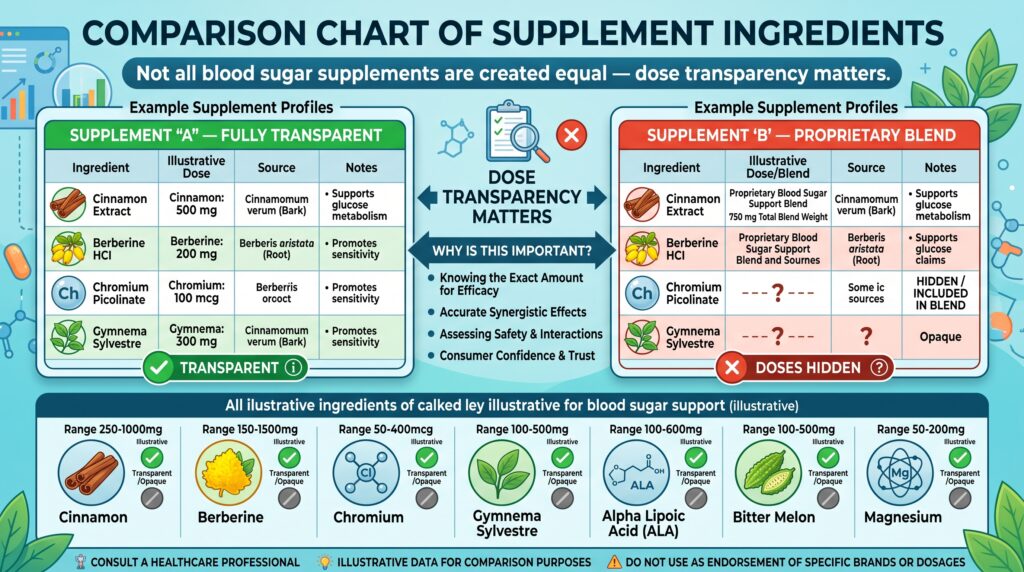
✅ Dose Transparency
A label that discloses individual milligram amounts for each active ingredient allows you to verify whether doses align with research protocols. Proprietary blends that list only a combined weight prevent this analysis by design.
✅ Dose Adequacy
An ingredient present at 10% of the research dose does not deliver the mechanism studied. Check that each active ingredient is present at or near clinically studied doses.
✅ Third-Party Testing
Look for supplements that have been tested by independent laboratories for purity, potency, and contaminant screening (e.g., USP, NSF, or ConsumerLab certification).
✅ Bioavailability Enhancements
Ingredients like berberine have poor natural absorption. Formulations with absorption enhancers such as liposomes, phytosomes, or piperine can significantly increase bioavailability.
❌ Red Flags to Avoid
- “Cure” or “treat” language — Supplements cannot cure or treat diabetes
- Unrealistic promises — “Lower your blood sugar in 3 days!”
- No Supplement Facts panel — Legitimate supplements always display this
- Unregistered products — The FDA has issued warnings against unregistered supplements making health claims
Safety First: Drug Interactions and Contraindications
Blood sugar supplements can interact with prescription medications. This is particularly important for:
| Supplement | Potential Interaction |
|---|---|
| Berberine | May have additive effects with blood sugar medications; inhibits CYP3A4 (affects many drugs including statins) |
| Cinnamon | May enhance the effects of blood sugar-lowering medications |
| Chromium | Generally safe at recommended doses; high doses may affect kidney function |
| Alpha-Lipoic Acid | May interact with thyroid medications and chemotherapy agents |
Critical Warning: The FDA and FTC issued joint warning letters in March 2025 to 10 companies for illegally marketing dietary supplements with unproven claims to treat, cure, or prevent diabetes. If a product sounds too good to be true, it probably is.
⚠️ If you are currently taking blood sugar medication, do not change, adjust, or discontinue your medication without your physician’s guidance. Supplements are additions to your health routine, not replacements for prescribed treatment.
The Bottom Line: What Works in 2026
Based on the available evidence through 2026:
| Ingredient | Evidence Strength | Best For |
|---|---|---|
| Berberine | ★★★★★ (Strongest) | Significant HbA1c reduction; rivals metformin |
| Cinnamon | ★★★★☆ | Mild-to-moderate fasting glucose reduction |
| Magnesium | ★★★★☆ | Correcting deficiency; improving insulin sensitivity |
| Alpha-Lipoic Acid | ★★★★☆ | Insulin sensitivity; neuropathy protection |
| Fenugreek | ★★★☆☆ | Post-meal glucose spikes |
| Chromium | ★★★☆☆ | Foundational mineral support |
Typical Expected Outcomes: HbA1c drops ranging from 0.3% to 1% after 3–6 months of consistent use with quality-controlled products at studied doses.
The Reality Check: Benefits appear only when supplements are taken at studied doses and combined with diet and exercise. No supplement can replace a healthy lifestyle or prescribed medication.
Frequently Asked Questions
Can supplements replace my diabetes medication?
No. Supplements are not medications. They are not intended to diagnose, treat, cure, or prevent any disease. Never replace prescribed medication with a supplement without medical supervision.
How long does it take for blood sugar supplements to work?
Most users report noticeable benefits in 3 to 6 weeks. Energy and cravings often improve first, followed by better blood sugar control.
Are there any supplements that actually lower blood sugar immediately?
No supplement provides immediate, dramatic blood sugar reduction. Consistent use over weeks to months is required for measurable benefits.
Can I take multiple blood sugar supplements together?
Yes, but with caution. Combination approaches like berberine plus cinnamon have shown synergistic benefits in clinical trials. However, always consult a healthcare provider before combining supplements, especially if you take prescription medications.
Related Resources
For more information on health and wellness as you age, explore these guides:
- Prostate Health After 50: The Complete Guide
- Prostate Health After 50: The Complete Guide (Part 2)
- Prosta Peak: The Complete Guide to Natural Prostate Support in 2026
- Best Prostate Supplements in 2026: Ingredients That Actually Work
Final Thoughts
The blood sugar supplement market in 2026 is more sophisticated — and more regulated — than ever before. The ingredients with the strongest evidence (berberine, cinnamon, magnesium, alpha-lipoic acid, and fenugreek) offer meaningful support for glucose metabolism when taken at clinically studied doses.
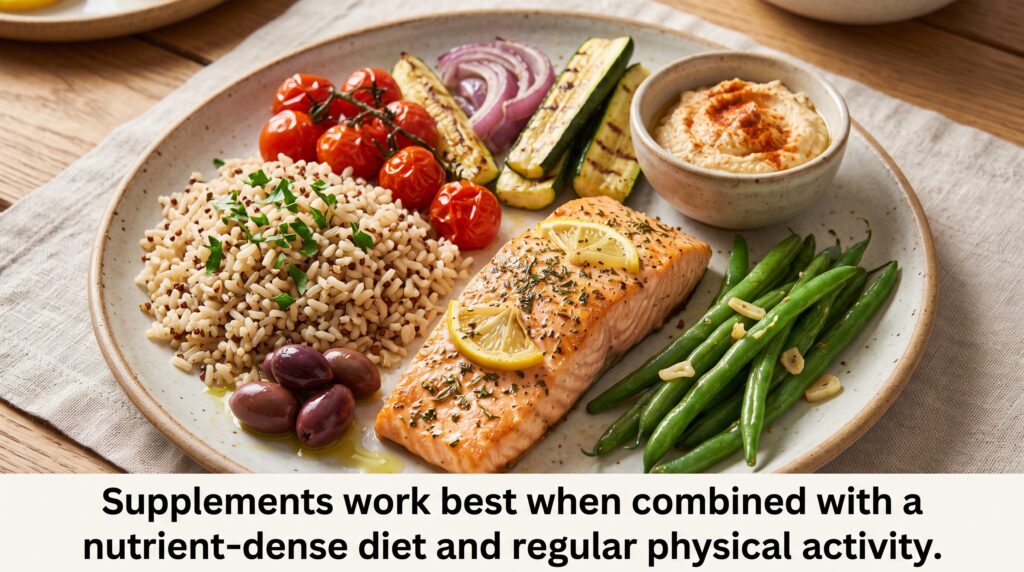
But remember: Supplements support; they don’t replace. They work best as part of a comprehensive approach that includes a balanced diet, regular physical activity, quality sleep, stress management, and — when necessary — prescribed medication under medical supervision.
Before starting any new supplement, have an honest conversation with your healthcare provider about your blood sugar goals, current medications, and whether supplementation is appropriate for your individual situation.
Disclaimer: This article is for informational and educational purposes only and does not constitute medical advice. The information contained herein is not intended to diagnose, treat, cure, or prevent any disease. Always consult a qualified healthcare professional before starting any supplement, particularly if you are pregnant, nursing, taking medication, or have a medical condition. Individual results may vary. Statements regarding dietary supplements have not been evaluated by the Food and Drug Administration.
Last Updated: July 2026
Tags
blood sugar supplements, best blood sugar supplements 2026, berberine blood sugar, natural blood sugar support, glucose metabolism, diabetes supplements, blood sugar ingredients, HbA1c reduction, cinnamon blood sugar, magnesium insulin sensitivity, alpha-lipoic acid, fenugreek glucose, chromium picolinate, blood sugar supplement guide, metabolic health