

Saw Palmetto for Prostate: What the Research Really Says
If you’ve been researching natural remedies for an enlarged prostate, saw palmetto has almost certainly come up. It’s the most widely used herbal supplement for prostate health in the world, with millions of men relying on it — yet the research around it is nuanced, often misrepresented, and worth understanding properly before you spend money on it.
This article covers what saw palmetto actually does, what the evidence shows (including the trials that disappointed and the ones that didn’t), and how it compares to pharmaceutical options for BPH.
What Is Saw Palmetto?
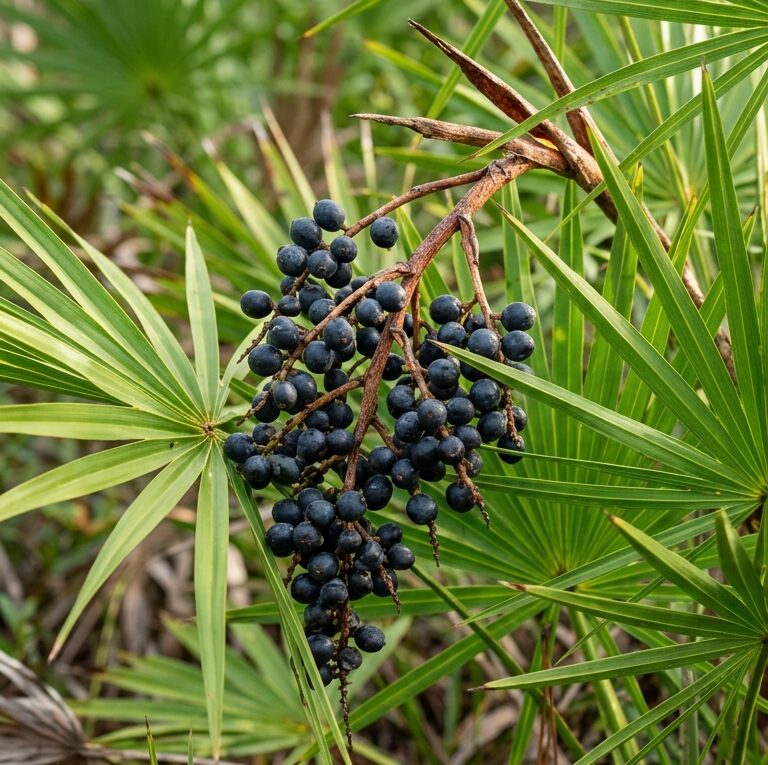
Saw palmetto (Serenoa repens) is a small palm tree native to the southeastern United States. Its berry extract has been used for urinary and prostate health for over a century. The active components are fatty acids and phytosterols, which appear to work through several mechanisms:
- Inhibiting 5-alpha reductase — the enzyme that converts testosterone to DHT (the hormone that drives prostate growth)
- Inhibiting growth factor receptors on prostate cells
- Anti-inflammatory effects on prostate tissue
- Mild alpha-blocker activity that relaxes the smooth muscle around the urethra
What the Research Actually Shows
The saw palmetto story in the research literature is complicated — and often mischaracterized in both directions.
The Negative Trials
The most cited negative result was the 2006 NEJM trial by Bent et al., which found saw palmetto no better than placebo for BPH symptoms. This study is frequently cited to dismiss saw palmetto entirely. However, critics note that the study used a relatively low-quality extract (not lipid-extracted, not standardized to 85–95% fatty acids) and used the IPSS symptom score — a tool primarily sensitive to severe symptom changes.
A subsequent 2011 JAMA study that tripled the dose also found no benefit.
The Positive Evidence
European research, primarily from Italy and Germany (where saw palmetto is prescribed as a pharmaceutical), has produced more positive results. A meta-analysis of 18 randomized trials found saw palmetto superior to placebo for improving peak urinary flow and reducing nocturia (nighttime urination). The Cochrane Collaboration’s review found improvements in urinary symptom scores and flow rate.
A key confounding factor across studies is extract quality. The hexane-extracted, liposterolic extracts used in European pharmaceutical-grade products (standardized to 85–95% fatty acids and sterols) consistently outperform the water- or ethanol-extracted versions in consumer supplements. This quality gap may explain much of the discrepancy between studies.
Saw Palmetto vs. Pharmaceutical Options
The main pharmaceutical treatments for BPH are:
- Alpha-blockers (tamsulosin/Flomax, alfuzosin): relax smooth muscle around the bladder neck and prostate. Work quickly (days to weeks). Side effects include dizziness and retrograde ejaculation.
- 5-alpha reductase inhibitors (finasteride/Proscar, dutasteride): reduce prostate size by blocking DHT production. Take 6–12 months for full effect. Side effects include reduced libido and sexual function in some men.
Saw palmetto is generally considered less potent than pharmaceutical 5-ARIs but with a far more favorable side effect profile. For men with mild-to-moderate BPH symptoms who want to avoid pharmaceutical side effects, high-quality saw palmetto extract is a reasonable first-line option. For severe symptoms, pharmaceutical treatment is typically more effective.
How to Choose a High-Quality Saw Palmetto Supplement
This is where most consumers go wrong. Look for:
- Liposterolic extract standardized to 85–95% fatty acids and sterols
- CO2 or hexane extraction (these preserve the active lipid components better than water/ethanol extraction)
- Doses of 320 mg daily — the amount used in most positive clinical trials (often as 160 mg twice daily)
- Third-party testing for purity and potency
Products from brands with pharmaceutical-grade European manufacturing standards tend to be more reliably effective than generic grocery store brands.
Saw Palmetto Combinations Worth Considering
Saw palmetto is often combined with other prostate-supportive ingredients in clinical trials and commercial formulas:
- Beta-sitosterol: A phytosterol that has independent evidence for improving urinary flow and reducing symptoms. Often found naturally in saw palmetto extract and as a co-ingredient.
- Pygeum africanum: African plum tree extract with anti-inflammatory properties. Several trials show synergistic benefit when combined with saw palmetto.
- Stinging nettle root: Shown to inhibit prostate cell proliferation and complement saw palmetto’s DHT-blocking activity.
- Zinc: Discussed in our prostate diet article — zinc is critical for prostate function and DHT metabolism.
Our overview of the best prostate supplements in 2026 covers these combinations and single-ingredient products in more detail.
Frequently Asked Questions
How long does saw palmetto take to work?
Most clinical trials showing positive results run for 3–6 months. Noticeable symptom improvement for urinary flow and nocturia typically occurs within 4–8 weeks of consistent use with a quality extract. Don’t judge effectiveness before 8 weeks.
Does saw palmetto lower testosterone?
No — saw palmetto blocks the conversion of testosterone to DHT but does not lower testosterone levels themselves. This is actually preferable to some pharmaceutical 5-ARIs, which reduce total DHT and can affect testosterone-dependent tissues beyond the prostate.
Can saw palmetto cause sexual side effects?
Rarely. Unlike pharmaceutical 5-alpha reductase inhibitors (which carry a well-documented risk of reduced libido and erectile dysfunction), saw palmetto’s side effect profile is minimal. A small number of case reports exist of sexual side effects, but controlled trials have not found a significant difference from placebo.
Is saw palmetto safe long-term?
Yes — saw palmetto has been used medicinally for decades and long-term safety data are reassuring. The main reported side effects are mild gastrointestinal symptoms (reduced when taken with food). It does not appear to affect PSA levels, which is important for prostate cancer screening (unlike finasteride, which reduces PSA).
The Bottom Line
Saw palmetto is not the magic bullet some marketing suggests — but it’s also not the placebo that some negative trials imply. High-quality, properly extracted saw palmetto at 320 mg daily has legitimate evidence for mild-to-moderate BPH symptom improvement, a clean safety profile, and is a reasonable option for men who prefer to start with natural interventions before pharmaceutical options. Extract quality is everything — don’t judge the ingredient by bargain-bin products.