

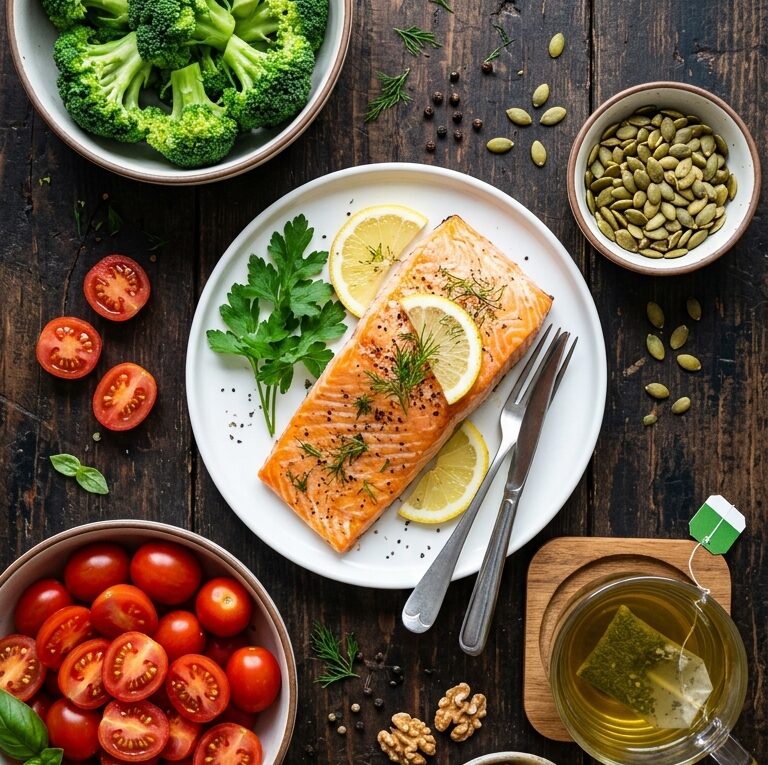
The Prostate-Friendly Diet: Foods That Help BPH (and Foods That Make It Worse)
What you eat has a direct and measurable effect on prostate health — both on the risk of developing prostate problems and on the severity of symptoms if you already have BPH (benign prostatic hyperplasia). Yet diet is rarely the first conversation men have with their doctors about the prostate.
This guide covers the prostate diet — what the research says about specific foods that reduce inflammation and support prostate function, and what to minimize or avoid if you’re trying to manage BPH or reduce long-term risk.
Why Diet Matters for the Prostate
The prostate is a hormone-sensitive gland that grows throughout a man’s life under the influence of dihydrotestosterone (DHT), a derivative of testosterone. Inflammation plays a central role in both BPH and prostate cancer progression. A diet that reduces systemic inflammation, regulates hormonal activity, and provides specific protective phytonutrients can meaningfully influence prostate health outcomes.
Geographic patterns support this strongly: men in countries with traditionally low-fat, high-vegetable diets (Japan, for example) have dramatically lower rates of prostate cancer than men in Western countries — and when these men emigrate and adopt Western diets, their risk rises toward Western levels within a generation.
The Best Foods for Prostate Health
1. Tomatoes and Lycopene
Lycopene is the carotenoid that gives tomatoes their red color, and it’s one of the most studied nutrients for prostate health. Multiple large observational studies have associated higher lycopene intake with lower prostate cancer risk. Lycopene accumulates preferentially in prostate tissue, where it acts as an antioxidant.
Critically, cooked tomatoes release lycopene far more bioavailably than raw — tomato paste, sauce, and cooked tomatoes provide significantly more absorbable lycopene than fresh tomatoes. Adding olive oil further increases absorption. Two to three servings of cooked tomato products per week is a practical target.
2. Cruciferous Vegetables
Broccoli, cauliflower, cabbage, Brussels sprouts, and kale contain sulforaphane and indole-3-carbinol — compounds that support detoxification pathways and may inhibit cancer cell growth. Sulforaphane in particular has been studied for its effects on prostate cancer cells in vitro and in small human trials.
3. Fatty Fish (Omega-3s)
Omega-3 fatty acids reduce the prostaglandin-mediated inflammation that drives prostate growth and discomfort. Men with higher omega-3 intake consistently show better prostate health outcomes in observational studies. Aim for 2–3 servings of fatty fish (salmon, sardines, mackerel) per week, or supplement with 1–2 g EPA+DHA daily.
4. Green Tea
Green tea catechins — particularly EGCG — have demonstrated anti-inflammatory and antiproliferative effects on prostate cells. A 2006 randomized controlled trial found that men with high-grade PIN (prostatic intraepithelial neoplasia) who took green tea catechin supplements had significantly lower rates of progressing to prostate cancer over one year compared to placebo. 2–3 cups of green tea daily (or a standardized EGCG supplement) is a practical approach.
5. Pomegranate
Pomegranate extract has shown notable activity in prostate cancer research — most famously in a 2006 study at UCLA that found pomegranate juice consumption lengthened PSA doubling time (a marker of cancer progression rate) in men with recurrent prostate cancer. The polyphenol content appears to slow prostate cell proliferation.
6. Zinc-Rich Foods
The prostate gland has the highest zinc concentration of any organ in the body. Zinc is involved in testosterone metabolism and has anti-inflammatory properties in prostate tissue. Good sources include pumpkin seeds (one of the highest whole-food sources of zinc), oysters, beef, and legumes.
Foods That Worsen Prostate Health
Red and Processed Meat
High consumption of red meat — particularly processed meat (bacon, sausage, hot dogs) — is consistently associated with higher prostate cancer risk in large studies. The proposed mechanisms include heterocyclic amines from cooking, high saturated fat content promoting inflammation, and iron-mediated oxidative stress. This doesn’t require total elimination — it means making fish and plant proteins the dietary default.
Dairy and Calcium Excess
High dairy intake — particularly from whole milk — has been associated with increased prostate cancer risk in several large cohort studies. Excessive calcium intake may suppress calcitriol (active vitamin D), which plays a protective role in prostate cells. Moderate dairy is not a concern; the risk signal is at very high consumption levels (3+ servings daily).
Refined Carbohydrates and Sugar
Chronic hyperinsulinemia from high sugar and refined carb intake elevates IGF-1 (insulin-like growth factor), a hormone that promotes prostate cell proliferation. The metabolic syndrome dietary pattern — high refined carbs, processed foods, sugary beverages — is associated with worse BPH outcomes and higher prostate cancer risk.
Excessive Alcohol
Heavy alcohol consumption is associated with higher prostate cancer risk and worsened BPH urinary symptoms. The proposed mechanisms include hormonal disruption (alcohol affects testosterone/estrogen balance) and increased inflammatory markers.
Connecting Diet to BPH Symptom Management
For men already managing an enlarged prostate, dietary anti-inflammatory strategies support whatever other interventions are being used. Our articles on how to shrink an enlarged prostate naturally and the best prostate supplements of 2026 provide complementary strategies that work alongside dietary changes.
Frequently Asked Questions
Can diet reverse BPH?
Diet alone is unlikely to dramatically reverse established BPH, but it can slow progression and improve symptom severity. Anti-inflammatory dietary changes reduce the inflammation component of BPH and support better urinary function alongside other treatments.
Is soy good or bad for the prostate?
Soy contains phytoestrogens (isoflavones) that interact with estrogen receptors and have been associated with reduced prostate cancer risk in Asian populations. Moderate soy intake (whole soy foods like edamame, tofu) appears protective or neutral. Concerns about soy and hormonal effects in men are largely unsupported by current evidence at typical dietary amounts.
How much lycopene should I aim for daily?
Studies showing prostate benefits have used 10–30 mg lycopene daily. A half-cup of tomato paste provides about 20 mg. Including cooked tomato products 3–4 times per week achieves meaningful intake without supplementation for most men.
The Bottom Line
A prostate-friendly diet isn’t dramatically different from a general anti-inflammatory diet — it emphasizes tomatoes, fatty fish, cruciferous vegetables, green tea, and zinc-rich foods while limiting red/processed meat, excessive dairy, and refined carbohydrates. These changes are practical, broadly beneficial for overall health, and supported by substantial evidence for prostate protection. They’re also most powerful when started before problems develop — making dietary prevention more valuable than dietary treatment.
2 thoughts on “The Prostate-Friendly Diet: Foods That Help BPH (and Foods That Make It Worse)”